LocalisedSEO, Oxnard California

Rank higher with professional search engine optimization

LocalisedSEO is a search engine optimization agency in Oxnard, California. Search engine optimization (SEO) is the practice of improving a website’s visibility in the unpaid results of a search engine results page. Rankings there are earned through technical health, content relevance, and external authority signals, and how quickly they move depends on your competition, domain history, and current site condition.

SEO performance
What you gain
Data-backed
Optimization
Technical
Precision
Local
Visibility
Durable
Rankings

How search engines decide what to rank

Search engines find pages through crawling, store them through indexing, and order them through a ranking algorithm. SEO works on all three stages, because a problem at any one of them caps what the other two can do.

Crawl budget is the number of pages a search engine will fetch from your site in a given period. It rarely constrains a 40-page local business site. It matters a great deal on large ecommerce catalogs, faceted filters, and sites generating thousands of thin URLs, where a crawler can spend its allowance on pages you never wanted indexed.

When several URLs hold near-identical content, a search engine picks one as canonical and folds the rest into it. That choice follows your canonical tags, your internal links, and your redirects. If those three signals disagree, the engine chooses for you, and the page it keeps may not be the one you optimized.

Google, Bing, and other search engines publish different guidelines. The underlying sequence stays the same, so a site built to be crawled and indexed cleanly tends to perform across all of them.

Stage 1

Crawling

A crawler follows internal and external links, reads robots.txt directives, and works through the XML sitemap listing your URLs.

Stage 2

Indexing

An indexer renders each page, reads its structured data, and consolidates duplicates onto one canonical URL.

Stage 3

Ranking

The ranking algorithm scores indexed pages against a query using relevance, page experience, and external authority signals.

When search visibility is weak, SEO fixes it

Your website does not appear on Google

Low impressions in Google Search Console mean the index is not surfacing your pages for the queries your customers type.

Leads go to competitors

Competitors rank for long-tail keywords that you do not target. Click share falls steeply with position, so ranking fourth on a query you could own hands most of that demand to someone else.

Every lead carries a click cost

With no organic rankings underneath your ads, your entire lead flow depends on paid spend. Nothing keeps arriving when the budget pauses.

Slow site speed

Weak Core Web Vitals scores raise the chance a visitor abandons before the page becomes usable. Page experience is one ranking input among many, but abandonment removes the conversion opportunity outright.

No SEO audit on record

Without an audit, you cannot see your crawl coverage, duplicate content, broken redirects, or the technical gaps that hold rankings back.

SEO built for measurable results

Each service below carries the campaign stage it belongs to, so the sequence and the deliverables sit in one place. Audits run first, on-page and technical work follows, then authority building and reporting continue month over month. The SEO resources library covers these stages in more depth.

Stage 1 · Audit

Technical SEO audit

Find and fix what stops pages from being crawled, indexed, or ranked. The audit reads robots.txt directives, XML sitemaps, canonical tags, and redirect chains, then reports each blocker by stage.

  • Crawl and index coverage analysis
  • Backlink profile review
  • Core Web Vitals measurement
  • Competitive keyword research
Stage 2 · On-page

On-page SEO optimization

Optimize the signals on the page itself, so each URL answers a single clear query intent and no two pages compete for the same one.

  • Title tags and meta descriptions
  • Schema markup implementation
  • Internal linking and anchor text
  • Header tags and content relevance
Stage 2 · On-page

Local SEO and the map pack

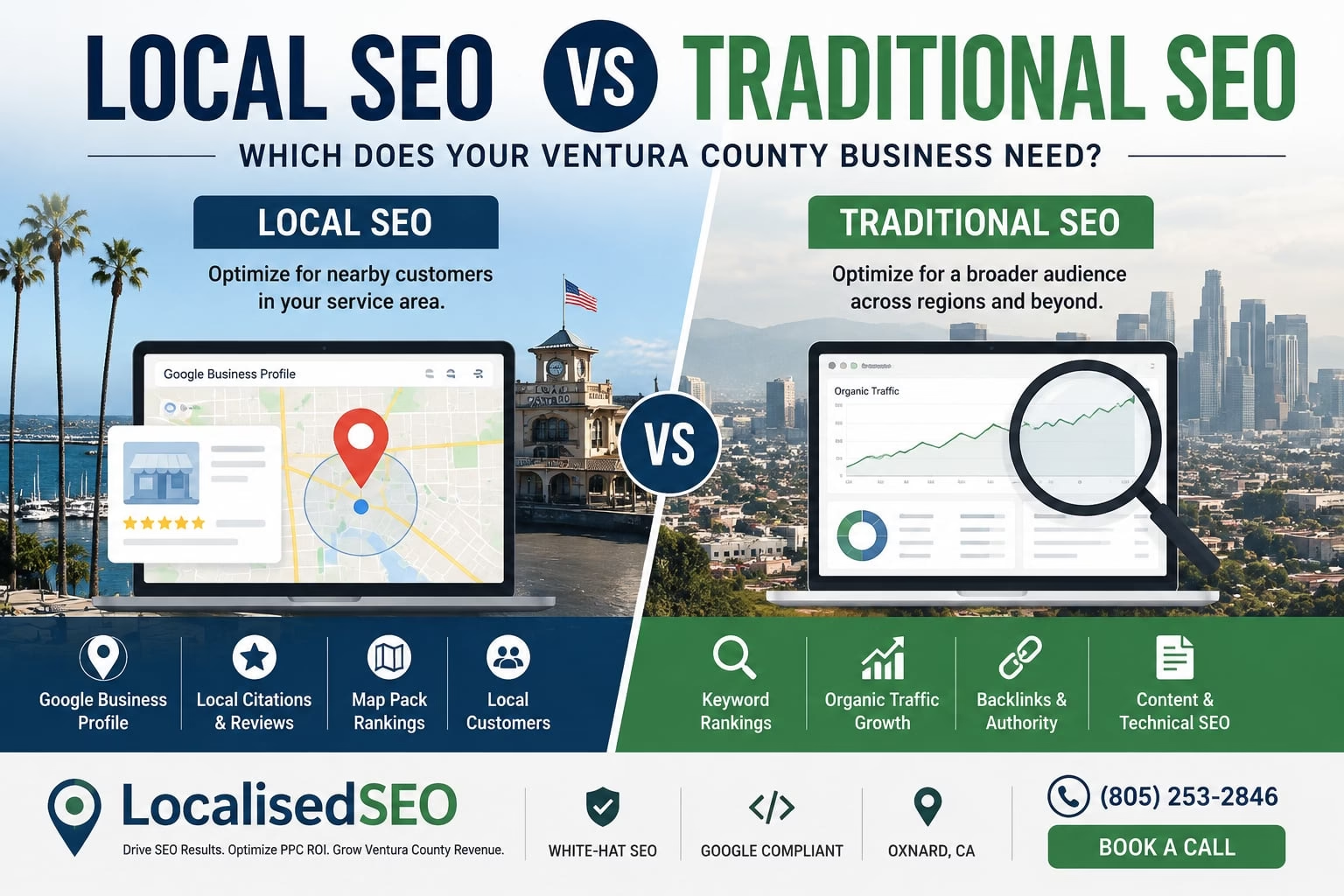
The map pack is the block of three local businesses Google shows above the organic results for location-based queries. Placement there is driven by relevance, distance from the searcher, and prominence. Proximity is fixed, so the work targets the other two.

  • Google Business Profile categories and services
  • Name, address, and phone consistency across directories
  • Review volume, recency, and response rate
  • Citations on local and industry directories
Stage 3 · Authority

Off-page SEO and link building

A link counts when it is topically related to your business, sits inside editorial content rather than a paid slot, carries anchor text that describes the destination, and comes from a domain with its own earned traffic. A hundred directory links do not equal one relevant editorial link.

  • Digital public relations to journalists and publishers
  • Guest contributions on relevant industry sites
  • Toxic backlink identification and disavow
  • Referring domain quality reporting
Stage 3 · Authority

SEO content and content marketing

Topical authority comes from covering a subject completely rather than publishing one page per keyword. That means a content calendar, a cluster plan, and a refresh cycle for pages that decay, the approach used across the LocalisedSEO resources library.

  • Content cluster and pillar planning
  • Editorial calendar and publishing cadence
  • Quarterly refresh of decaying pages
  • Named authorship and cited sources
Ongoing · Reporting

Analytics and reporting

Track impressions, keyword positions, organic sessions, and conversions, and report on all four every month with the change since the previous report.

  • Google Analytics configuration
  • Search Console monitoring
  • Keyword position tracking
  • Monthly performance reports

What the first six months look like

Different metrics move at different times. Knowing which number to watch in which month is what stops a campaign from being judged too early.

Weeks 1 to 4

Audit and remediation

Positions rarely move yet. What moves is index coverage: errors close in Search Console, blocked pages become crawlable, and duplicate URLs consolidate onto one canonical.

Months 2 to 3

On-page and content

Impressions rise before positions do, because pages start matching more queries before they climb on any single one. Long-tail terms usually convert to clicks first.

Months 4 to 6

Authority and compounding

Earned links begin to register and competitive head terms move. This is the first point where organic sessions and conversions are worth judging against the baseline.

Transparent SEO pricing

Each plan states who it fits, not just what it includes.

Starter
Local SEO
$599 per month

Best for a single-location business competing inside one city or service area, with a site under roughly 20 pages.

Three-month minimum

  • Google Business Profile optimization
  • Local citation building
  • On-page SEO for 5 pages
  • Keyword tracking for 25 keywords
  • Monthly reporting
Get started
Enterprise
Authority
$1,999 per month

Best for national or ecommerce sites where crawl budget, faceted URLs, and competitive head terms are the constraint.

Six-month minimum

  • Everything in Growth
  • Crawl budget and log file analysis
  • Unlimited page optimization
  • 15 earned links per month
  • 4 articles per month
  • Dedicated SEO consultant
Get started

After the minimum term, plans continue month to month and cancel with 30 days’ notice. At offboarding you keep every asset: the site, the content, the Google Business Profile, and administrator access to Analytics and Search Console. Nothing is held on a LocalisedSEO account.

Sustainable SEO that follows Google’s guidelines

Google assesses content for Experience, Expertise, Authoritativeness, and Trust (E-E-A-T). Those are not switches you toggle. They are demonstrated on the page: a named author with stated credentials, first-hand detail that only a practitioner would know, claims tied to cited sources, and visible contact and business information.

The standard tightens on Your Money or Your Life (YMYL) topics, meaning subjects that can affect someone’s health, finances, safety, or legal position. Medical, legal, and financial clients sit squarely in that category, so their content carries author bios, credentials, and source citations by default.

White hat only

No keyword stuffing, cloaking, hidden text, or paid link schemes, all of which risk manual actions

Data-driven strategy

Decisions from crawl data, Search Console reports, and competitor analysis

Durable, not permanent

Earned rankings decay more slowly than paid placements, but they hold position only with ongoing maintenance

Development included

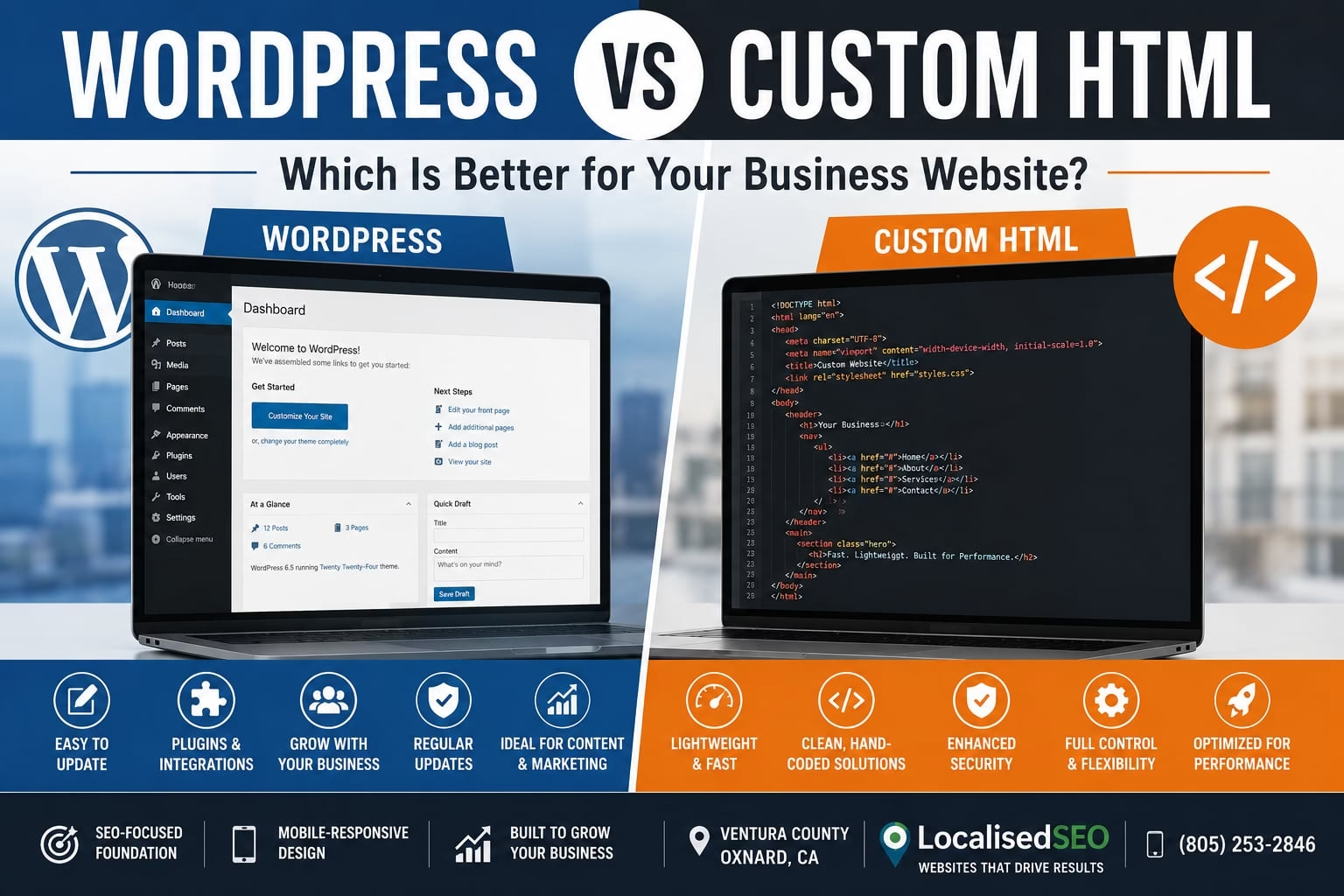
Technical fixes are implemented by LocalisedSEO on WordPress builds, not handed back as a list

Google Analytics Google Search Console Bing Webmaster Tools Microsoft Clarity Ahrefs

Ahrefs supplies backlink and referring-domain data. Search Console supplies impressions and index coverage. Analytics supplies sessions and conversions. Clarity supplies on-page behaviour recordings. Bing Webmaster Tools covers the non-Google index.

  • Dentists and medical practices
  • Attorneys and law firms
  • Home services and trades
  • Medical spas and day spas
  • Real estate and mortgage
  • Gyms, yoga, and martial arts
  • Software as a Service firms
  • Restaurants and hospitality

Get a free SEO audit

The audit returns your index coverage, the technical blockers by stage, the keywords your competitors rank for that you do not, and which plan fits your site. No obligation follows it.

Frequently asked questions

How long does SEO take to work?

Index coverage improves within weeks. Impressions typically move in months 2 to 3, and clicks and conversions in months 4 to 6. Competition, domain age, and site condition shift that range, because a new domain in a crowded vertical starts further back than an established one with a clean technical base.

What does an SEO audit include?

The audit reports what blocks crawling, what blocks indexing, and what limits ranking. It covers robots.txt, sitemaps, canonicals, redirects, on-page signals, the backlink profile, schema markup, Core Web Vitals, and content gaps against competitors.

Is SEO worth it for a small business?

It depends on whether people search for what you sell. If they do, organic visibility reduces how much lead flow depends on paid spend, and the asset persists between campaigns. If demand is generated by referral or outbound instead, paid search or another channel is the better first investment.

What is the difference between SEO and paid ads?

Both are forms of search engine marketing. SEO earns placement in the organic results and compounds slowly. Paid ads buy placement above those results and deliver immediately, then stop when the budget stops. Most campaigns run paid search during the first months while organic rankings build.

Does SEO include development work?

On WordPress sites, LocalisedSEO implements the technical fixes directly: redirects, canonical tags, schema, image handling, and Core Web Vitals remediation. Custom platforms and site migrations are scoped separately and may need your own developer for deployment.

How do you track SEO progress?

Impressions and index coverage come from Search Console, sessions and conversions from Google Analytics, referring domains from Ahrefs, and positions from tracked keyword sets. Each monthly report shows the change since the previous one, not a snapshot.